
954-828-0848Call Us for Your Consultation
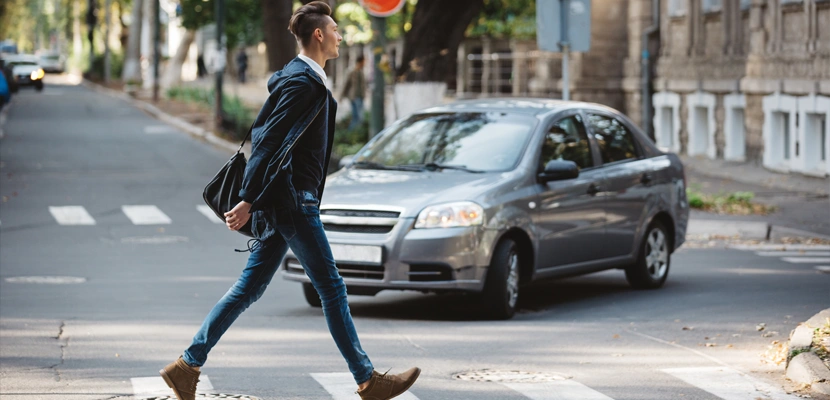
One second you were crossing the street. The next, you were on the ground, and nothing about your day looked the way it did an hour ago. You hurt in a way you never have before. You do not know if you can work tomorrow, and you are already bracing for the insurance company to blame you for the pedestrian crash.
You are not the only one. In 2025, Broward County logged 1,239 pedestrian crashes, according to the Florida Department of Highway Safety and Motor Vehicles. 57 people died and 1,117 people were injured in these crashes. Drivers turn without checking the crosswalk. They look at a phone instead of the road. They speed down Sunrise Boulevard and Federal Highway, and when they hit someone on foot, that person is almost always the one who gets hurt the worst.
Talk to an Attorney Before Accepting Any Settlement.
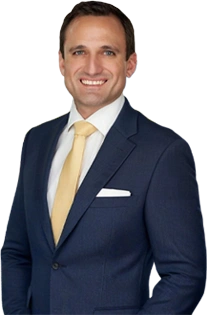
That is the fight George Palaidis, a Fort Lauderdale personal injury lawyer, has built his career around. He has pushed Florida lawmakers for stronger protections for people on foot and on two wheels, treating them as a priority rather than an afterthought to car crash work. You pay nothing unless we win. Contact us for a free consultation. Tell us what happened, and we will tell you where your case stands and if you may recover compensation.
| National Trial Lawyers Top 100 (SE Florida) | Florida Bicycle Association Member | Broward County Bar Association | No Fee Unless We Win |
Many pedestrian crashes here happen in a signaled crosswalk or mid-block, where there is no crosswalk at all. Corridors like Las Olas Boulevard, A1A, and US-1/Federal Highway carry heavy traffic and long stretches between signals, so people cross where it is convenient rather than walking two blocks to the nearest light.
A large share of crashes happens when a driver turns. A left off Sunrise Boulevard or a right onto Broward Boulevard puts a vehicle into a crosswalk a pedestrian is already using, while the driver watches traffic instead of the curb. That failure to yield is one of the clearest forms of negligence we see.
Parking lots create a different danger. In the lots around Downtown and Flagler Village, drivers backing out often never see the person walking behind them until it is too late. These crashes happen at low speed, but the injuries are often severe because the driver had no time to brake.
Along the I-95 and I-595 corridor, and on darker streets after sunset, distracted and impaired drivers cause a different set of crashes. A driver on a phone, or one who has had too much to drink, often does not see a pedestrian until impact. Some leave the scene entirely. That does not mean your case ends there.
A pedestrian has no seatbelt, no airbag, and no metal frame between them and a moving vehicle. That is why so many of these crashes end in severe injuries.
Pedestrians have a significant risk of suffering traumatic brain injuries. Even a crash at 20 miles per hour can throw a person into the pavement hard enough to cause a lasting traumatic brain injury. The full extent of damage may not show up for weeks.
Broken bones are common too, especially in the legs, hips, and pelvis, along with internal injuries that are not always visible right away. Surgery, plates, screws, and months of physical therapy are the norm rather than the exception, and treatment at Broward County hospitals is often required.
None of that stays confined to the hospital. A fractured leg means missed shifts and missed paychecks. A brain injury can mean months before you are cognitively able to return to your job at all. We build every case around documenting the full weight of what happened, medically and financially, because a partial picture often leads to a lowball offer.
Florida law is clear about who has to yield and when. Under Florida Statute § 316.130, a driver must stop and stay stopped for a pedestrian in a signaled crosswalk. The driver must also slow or stop for a pedestrian crossing an unmarked crosswalk, even where there is no signal at all Near corridors like Broward Boulevard and Sunrise Boulevard, where crosswalks sit far apart, that duty to yield does not disappear just because traffic is moving fast.
Florida also classifies pedestrians and cyclists as Vulnerable Road Users (VRU). Since 2024, drivers who cause serious injury or death to a VRU while committing a moving violation face enhanced fines and license suspension.
Being outside a marked crosswalk does not automatically end your case. Florida asks whether the driver acted with reasonable care given the whole situation, not just whether you were standing on painted lines. Shared fault can reduce what you recover. It rarely erases your right to recover something.
Florida runs on a no-fault system, so your own Personal Injury Protection, or PIP, coverage is usually the first place a claim goes, even if you were hit while walking. PIP typically covers a share of your medical bills and lost wages regardless of who caused the crash, but Florida requires treatment within 14 days of the crash or you can lose that benefit entirely.
If the driver who hit you was uninsured, or never stuck around long enough to be identified, your own uninsured motorist coverage can step in, if you carry it. A hit-and-run does not have to be the end of your case. It changes how we build it.
Once a claim goes beyond PIP, Florida’s comparative negligence law decides how much you can recover. Under Florida Statute § 768.81, if you are found more than 50% at fault, you cannot recover damages at all. At 50% or less, your recovery is reduced by your share of the fault. Insurers lean hard on this rule to shift blame onto the person who was hit. We push back with evidence, not assumptions.
This reflects Florida law as of July 2026.
Call 911 and get checked by a paramedic even if you feel fine. Adrenaline hides pain, and Florida’s 14-day rule for PIP treatment means waiting to see how you feel next week can cost you real money. If you can, get the names of anyone who saw what happened and note the traffic signal at the moment of the crash.
Report the crash and let the police document the scene before evidence disappears. Do not give a recorded statement to the other driver’s insurance company. Adjusters ask questions designed to make you say something that sounds like shared fault, and that recording follows your case for months.
We start every pedestrian case by pulling camera footage near the crash site, canvassing witnesses before memories fade, and reconstructing how the driver and the pedestrian moved through the intersection. George Palaidis has spent years pushing for stronger Vulnerable Road User protections in Florida to protect people walking and biking.
From there, we build the financial side of the case: every medical bill, every missed paycheck, every future surgery a doctor says you will likely need. Insurers settle for less when the file in front of them looks incomplete. We do not send an incomplete file.
George Palaidis is recognized among The National Trial Lawyers Top 100 for Southeast Florida and holds membership with the Broward County Bar Association and the Florida Bicycle Association. If your case needs to go before a judge at the Broward County Courthouse, we prepare it to be tried, not just settled.
Call us Today 954-828-0848
Your own auto insurance, if you carry a policy, pays first under Florida’s no-fault PIP coverage, even though you were on foot. PIP generally covers a share of your medical bills if you start treatment within 14 days of the crash. Once PIP is exhausted, the at-fault driver’s liability insurance can cover what is left.
A hit-and-run does not end your case. Uninsured motorist coverage, if you carry it, can cover what the missing driver’s insurance would have paid. Police reports, camera footage, and witness statements gathered quickly often help identify the driver later, so acting fast matters.
Often, yes. Florida reduces your compensation by your percentage of fault rather than eliminating it outright, as long as you are found 50% or less at fault. Crossing mid-block instead of at a crosswalk does not automatically bar your claim. It becomes one factor among several that we address with evidence.
Not automatically, but drivers carry the heavier legal duty. A driver must yield to a pedestrian in a marked or unmarked crosswalk and exercise due care everywhere else. Whether that duty was met usually comes down to the intersection, the signal timing, and where you were standing.
Florida generally gives you two years from the crash date to file a negligence claim, with limited exceptions. Camera footage and witness memory fade quickly, so waiting even a few weeks can weaken a strong case. Confirming your exact deadline early protects your claim.
Nothing upfront. A Fort Lauderdale pedestrian crash lawyer at Palaidis Law works on contingency, which means we only get paid if we recover money for you. Your first consultation is free, and there is no obligation to hire us afterward.
If you still have questions after reading this, that is exactly what a free consultation is for.
You did not cause the situation you are in right now, and you should not have to untangle it alone. Contact Palaidis Law today for a free consultation about your pedestrian crash. There is no fee unless we win. If a bicycle was involved, our bicycle crash claims page covers those cases, and if you were driving, see our car crash lawyer page.


They're the best!!! They make the impossible possible and are always there to help!!! Thank you George and Omar!!! ✨
I highly recommend George Palaidis! We at James Club Recovery, a certified program in Broward County, have worked with George Palaidis, on numerous occasions and have had tremendously successful outcomes.…
If I could give this firm 100 stars, I would. I don’t think words can describe the wonderful person and amazing attorney George is. His firm helped my family out…
Had a great experience with George. Extremely professional, responds in a timely manner, and was there to help through the entire case. Would definitely recommend to anyone. Thanks George!
George is AMAZING! My experience with Palaidis Law was nothing short of perfect; George explained everything to me in plain language, answered all my questions, and got my case dismissed…
A crash can leave you facing medical bills, missed work, and an insurance company that is in no hurry to treat you fairly. Palaidis Law, PA works on contingency, so you pay nothing unless we recover for you. Contact us today for a free, confidential consultation and find out where you stand.



25550 N Federal Highway, Suite 13
Fort Lauderdale, FL 33305

Call Us for Your Consultation
Copyright © 2026 Palaidis Law • All Rights Reserved. Disclaimer | Site Map | Privacy Policy. Digital Marketing By: 
*Images are obtained under license from Canva and other third-party stock image providers, with attribution included where required.